In a world flooded with fast fashion and cluttered closets, the minimalist wardrobe has become a refreshing alternative. It’s not about having fewer clothes for the sake of minimalism—it’s about having the right clothes that truly reflect who you are. A minimalist wardrobe allows you to simplify your life, reduce decision fatigue, and elevate your personal style.
This guide will walk you through every step of the process. From decluttering your closet to choosing timeless essentials, you’ll learn how to build a wardrobe that works for your lifestyle and values.
Why Choose a Minimalist Wardrobe?
Minimalism is not just a design aesthetic—it’s a lifestyle philosophy. When applied to fashion, it means curating a collection of clothes that are versatile, long-lasting, and intentionally selected.
Here are a few reasons why people switch to minimalist wardrobes:
- Less stress. No more morning chaos trying to decide what to wear.
- More savings. You buy fewer clothes and make better investment choices.
- Eco-consciousness. You consume less and reduce waste.
- Clarity of style. Your wardrobe reflects your identity without the noise.
But beyond practicality, building a minimalist wardrobe gives you space—physically and mentally—for what really matters.
Step 1: Define Your Style and Lifestyle Needs
Before decluttering anything, take a moment to think about your style identity. Ask yourself:
- What colors do I naturally gravitate toward?
- Which outfits make me feel the most confident?
- What activities do I do most often?
You don’t need to follow trends or chase Pinterest boards. A minimalist wardrobe is personal. Whether your aesthetic leans toward casual, professional, sporty, or classic, your wardrobe should reflect your real life, not a fantasy.
Also, consider the climate where you live and how often you go to formal events, work in an office, or stay at home. A digital nomad in warm climates will build differently than someone with a corporate job in the city.
Step 2: Declutter With Intention
Now it’s time to edit your current wardrobe. Decluttering is often the hardest part, but it’s also the most freeing.
Take everything out of your closet and divide your clothes into three categories:
- Love it and wear it often.
- Haven’t worn it in a year.
- Sentimental or “just in case.”
Keep only what fits, flatters, and functions for your lifestyle. Be ruthless but also kind. You don’t have to throw everything away. Donate or sell items that no longer serve you. If something carries sentimental value but isn’t functional, store it separately. Minimalism isn’t about deprivation—it’s about intention.
Step 3: Choose Your Color Palette
Color simplifies everything. A neutral color palette makes mixing and matching easier. Start with a base of black, white, gray, navy, or beige. Then add a few accent colors that complement your skin tone or reflect your personality.
Stick to colors that work together harmoniously. This doesn’t mean your wardrobe has to be boring. On the contrary—limiting your colors helps you build outfits faster and with more style coherence.
Think of it this way: if every piece in your wardrobe works with at least three other items, you’ve created a winning minimalist combination.
Step 4: Identify and Invest in Wardrobe Essentials
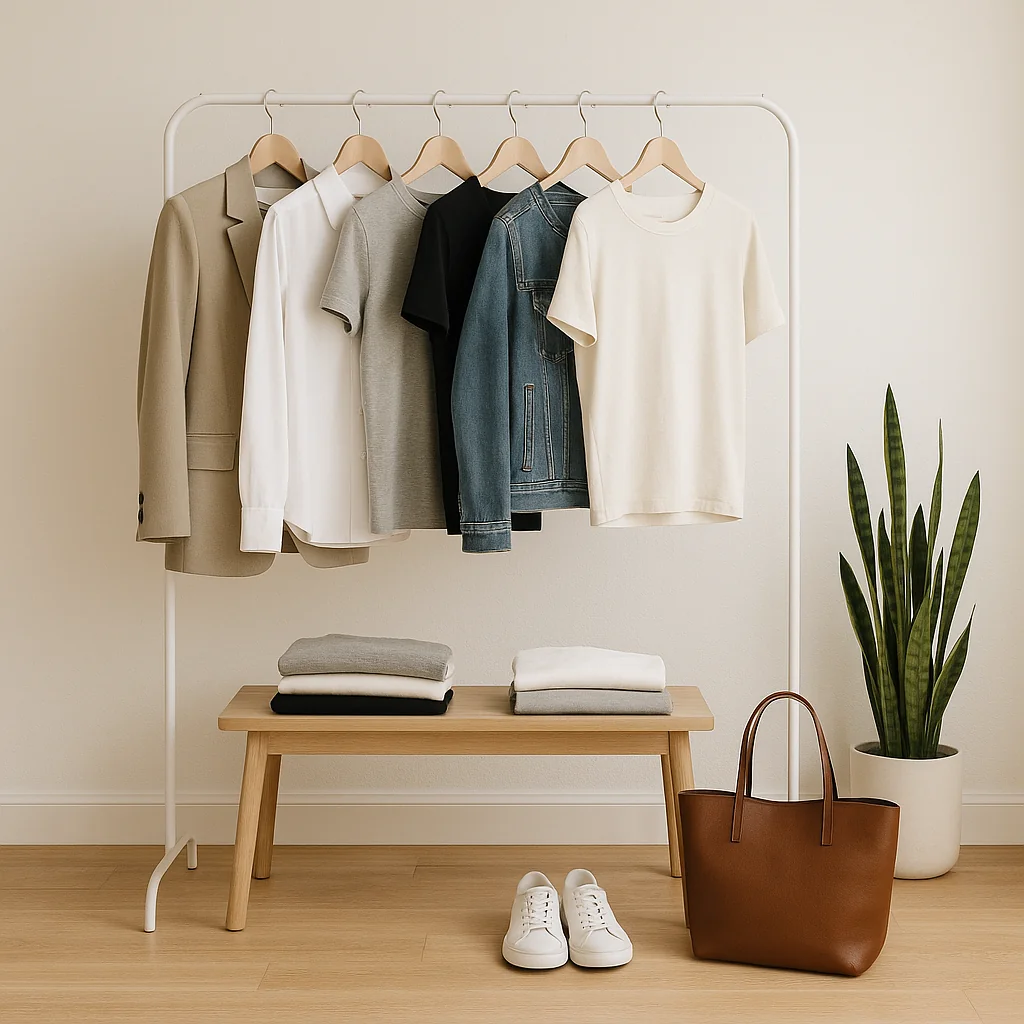
A minimalist wardrobe is built around core essentials that can be worn in multiple ways. You don’t need a set number of items—focus on quality, not quantity.
Typical wardrobe essentials may include:
- A tailored blazer
- A crisp white shirt
- A versatile pair of jeans
- Neutral t-shirts and tanks
- A little black dress or equivalent
- Comfortable, stylish sneakers
- A quality coat or jacket
Choose fabrics that feel good on your skin and hold up over time. Prioritize natural fibers like cotton, wool, and linen, and avoid buying cheap synthetics that lose shape or color quickly.
Think of each item as a building block. If it doesn’t serve at least two purposes or fit at least three outfits, it probably doesn’t belong in your minimalist closet.
Step 5: Prioritize Quality Over Quantity
In a minimalist wardrobe, every item should earn its place. That means choosing high-quality pieces that last longer and feel better.
When shopping, ask:
- Is this made to last?
- Can I wear it at least 30 times?
- Does it match other items in my wardrobe?
- Does it fit me well now—not after I lose weight or gain muscle?
Minimalist fashion is not about chasing the latest sales—it’s about intentional purchases that make your life simpler and more stylish. You may spend a bit more upfront, but you’ll end up buying less overall.
Step 6: Build Around Versatility
One of the most powerful benefits of a minimalist wardrobe is versatility. That blouse you wear to work should also look great with jeans on the weekend. The dress you wear to dinner should also work with a cardigan and flats for daytime errands.
Think layers. A long coat over a monochrome base. A denim jacket with a sleek dress. Scarves or belts that can add flair without bulk.
When you focus on pieces that are multifunctional, you need fewer clothes to do more.
Step 7: Use the One-In, One-Out Rule
Once you’ve curated your wardrobe, it’s important to keep it that way. Avoid falling back into old shopping habits by applying the one-in, one-out rule: for every new item you buy, let go of one existing piece.
This keeps your wardrobe balanced and prevents clutter from creeping back in. It also encourages thoughtful shopping—only bringing in something when it truly adds value.
Step 8: Make Room for Personal Touches
Minimalism isn’t about being bland. Once your foundation is set, feel free to add a few pieces that express your individuality.
A statement necklace, a printed scarf, a favorite graphic tee—just one or two items can go a long way in showcasing your personality without overwhelming your closet.
The key is moderation. Your wardrobe should be functional first, and expressive second. You’ll find that the cleaner your style, the more your accessories and personality will shine.
Step 9: Embrace Seasonal Swaps
If you live in a climate with seasons, rotate your clothes every few months. Store off-season items in boxes or under-bed containers to free up space and keep your wardrobe focused.
This seasonal swap helps you appreciate your clothing more and refresh your style without adding anything new. It also allows you to reassess what you actually wear, ensuring that everything in your closet is current and useful.
Step 10: Enjoy the Freedom of Less
The ultimate reward of building a minimalist wardrobe is freedom. You save time in the morning. You feel more confident in what you wear. You shop less, waste less, and make space—mentally and physically—for what truly matters.
And the best part? You don’t need to do it all in one day. Minimalism is a process, not a destination. You’ll make mistakes, change your mind, and evolve over time. That’s part of the beauty of it.
You’re not just building a wardrobe—you’re building a lifestyle that reflects clarity, intention, and authenticity.
Step 11: Curate a Capsule Wardrobe for Travel
Minimalism and travel go hand in hand. A curated capsule wardrobe for travel means you can pack light without sacrificing style. The key is to bring interchangeable pieces that layer well and suit a variety of occasions.
For example, a single neutral blazer can elevate both jeans and a dress. Three tops, two bottoms, and one pair of shoes can yield up to a dozen outfit combinations if chosen strategically. Stick to your color palette and focus on comfort, layering ability, and versatility.
By mastering this, you’ll travel lighter, faster, and with less stress—proving that minimalist fashion works beyond your daily routine.
Final Thoughts
A minimalist wardrobe isn’t about sacrifice. It’s about making room for what you truly love, need, and wear. It brings intentionality into an area of life that often gets overlooked. And while it might start with clothes, the mindset of minimalism often spills into other areas: work, home, relationships, and priorities.
Start small. Let go of what you don’t need. Choose quality over quantity. And remember: your wardrobe should serve you—not the other way around.
With a minimalist wardrobe, you gain more than space—you gain freedom.